Tips and Tricks of Videography for Surf
Below are some tips and tricks that I have been asked about filming people in the surf!
01.
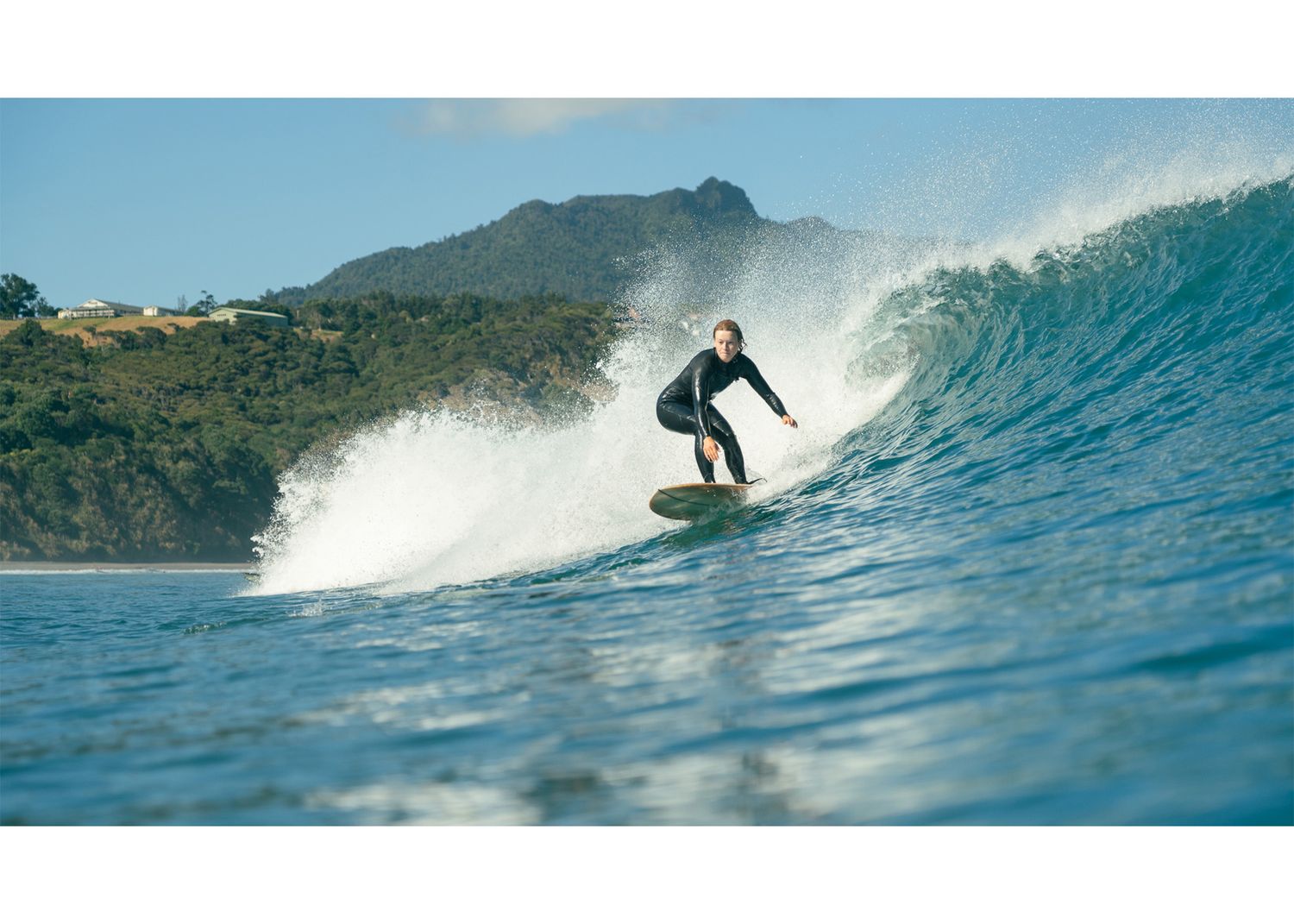
Gear and Angles
Work to the advantage of the gear you have now.
Does it have a 'wide' focal length lens? i.e., a phone camera or a fixes lens camera, or a lens under 50mm?
Great! You can get close to subjects and tell more of a story of the person and the surrounding better. Subjects are less isolated from their background, immerse them in!
02.
RUN ahead
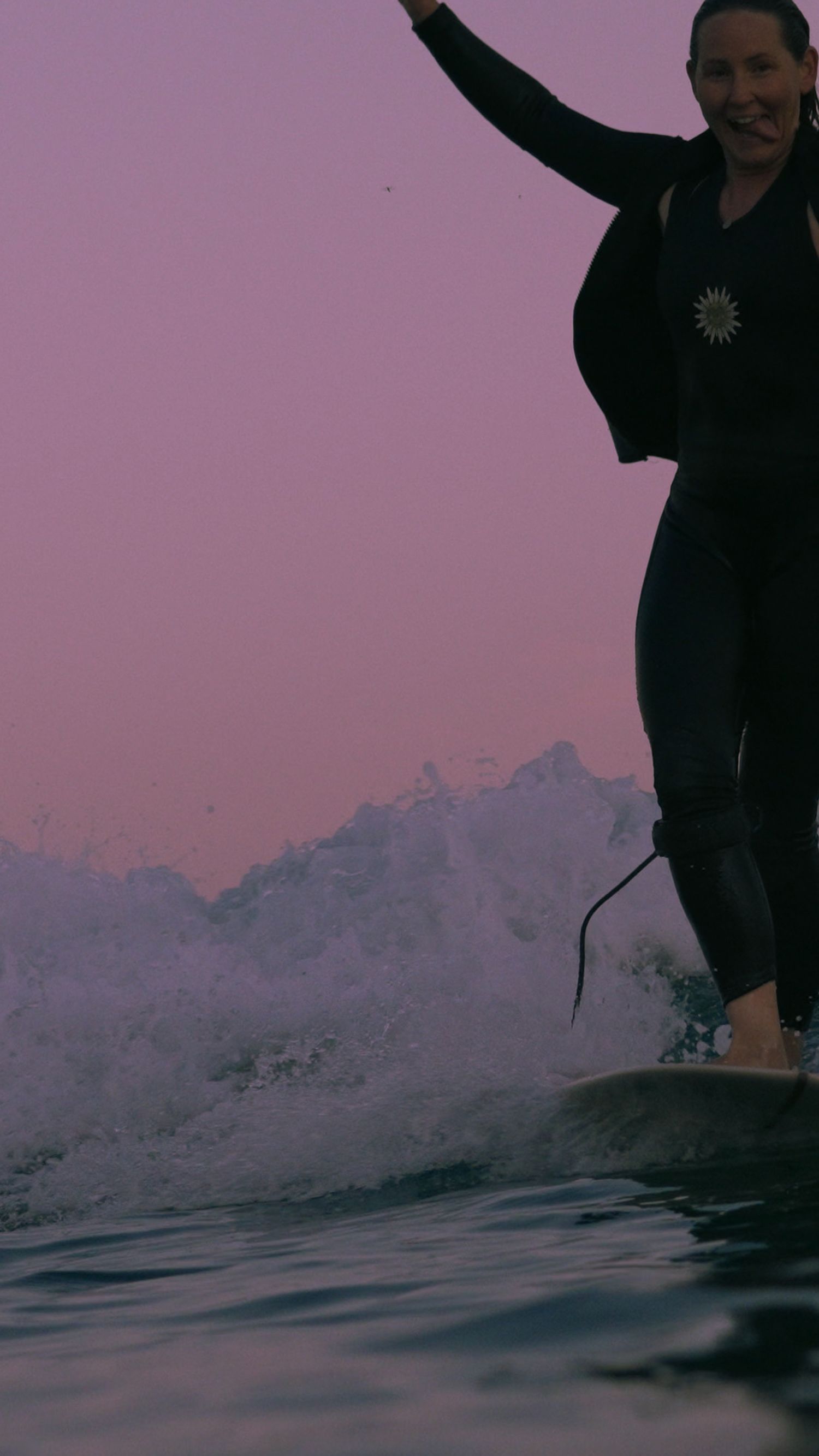
A personable story works better when you can capture a person's face and expressions. So RUN AHEAD!! As the subject walks down the stairs with their board, or into the water. Get those motions and capture their smile as they see the ocean x
Unless you are Moses, you cannot run in the sea. The fastest way to get to/from the lineup is swimming backwards, back against the water and kick out, like an Otter, or a Navy Seal.
03.
Anticipate action
Now you are in the lineup, and you might have missed the pop up and nose riding because you are behind the wave.
On a beach break where there are unpredictable waves, get close to the surfer first and film close up shots of pop ups.
Are they choosing more lefts or right hand waves?
Then swim diagonally towards the more open face of the wave they chose, away from the whitewash, towards the beach, like a wave rolling in.
An angled shot, here we come!
04.
Be one with the surfer
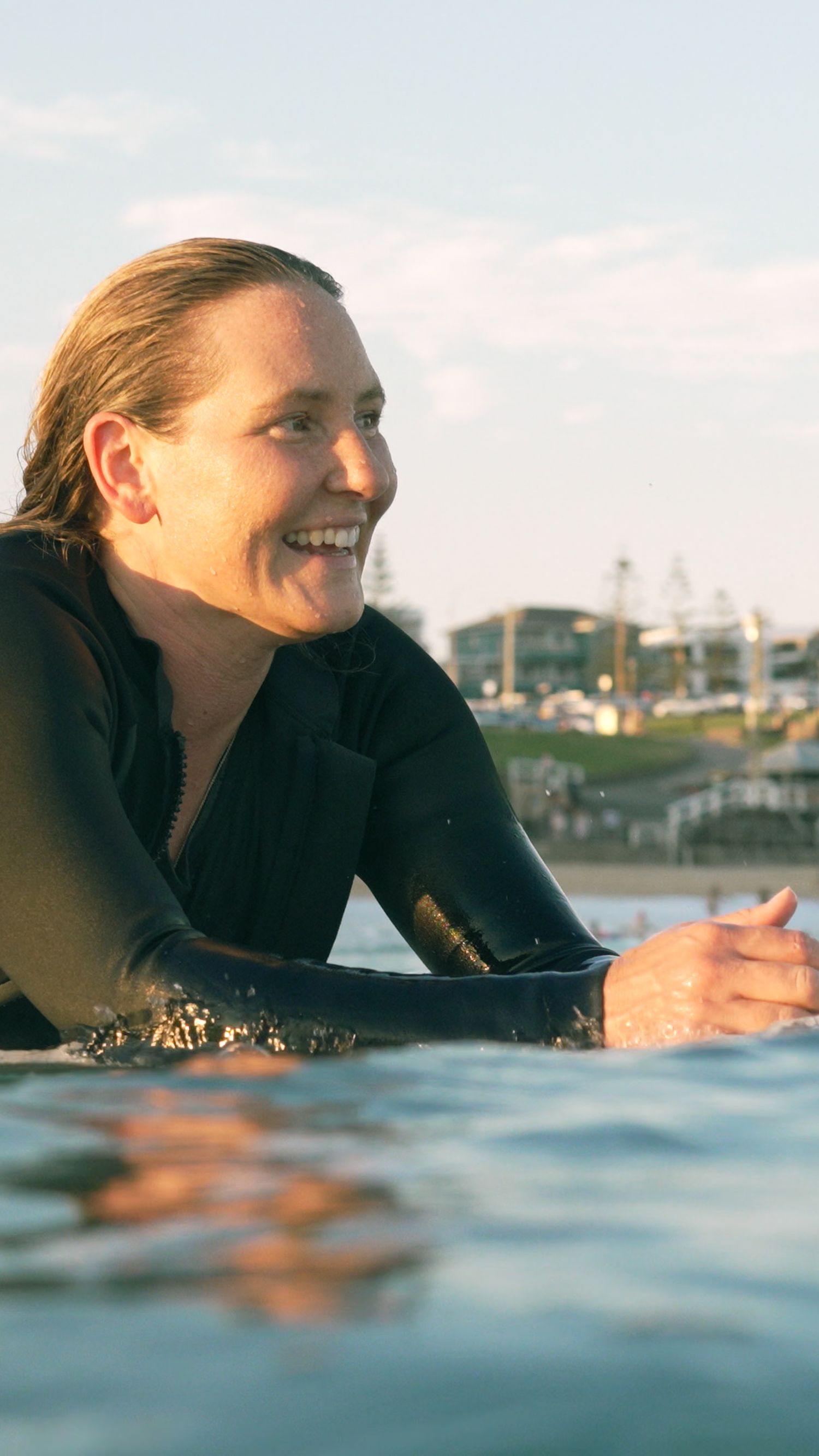
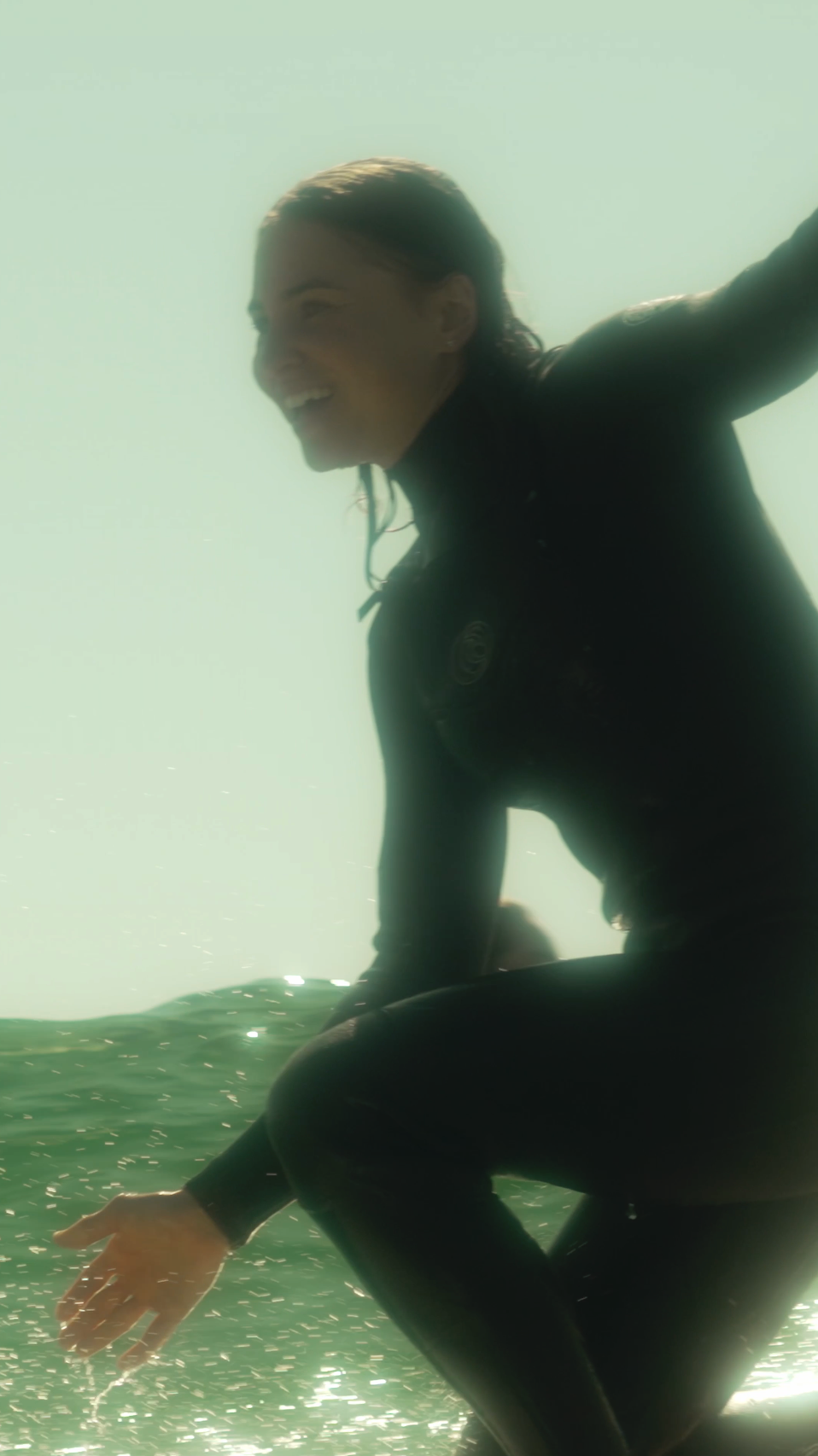
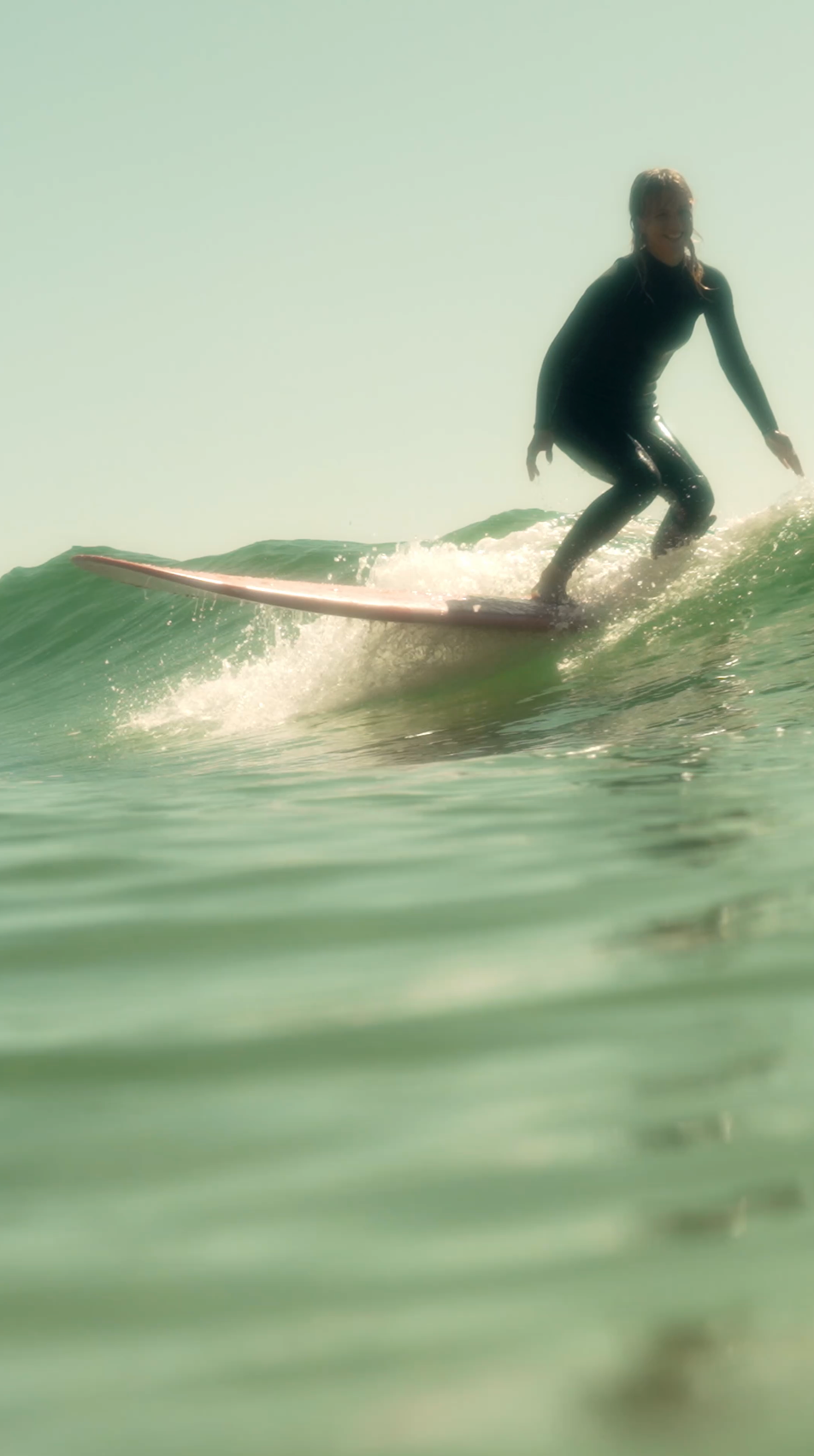
Being focused is great, but also have fun while you are filming. Feel the stoke of the surfer, the frustration of a wave. It's your time to get creative!
Videography is all about motions. Don't stop recording when you get pushed by a wave! You might capture some cool footage to use as a transition in post!
Capture different movements, in different angles, in different light on the session. Pan around, cheer on the surfer and share your stoke!
How do I stabilise my footage in the water?
I started with a camera that had NO in body stabilisation. A lot of the unwanted movements come from kicking to stay afloat, or when a wave pushes you over.
1) If your camera has in-body stabilisation, turn that thing ON. If your lens has Optical Image Stabilisation, turn that ON!
2) Clutch the camera close to your heart, lock those arms in. You are the best stabiliser. Breathe in while kicking, and stop while recording. This is also why I swim backwards: it allows my arms to be free from resistance aside from my camera while filming sideways and kicking steadily.
3) If you are not moving, use your arms as a gimbal: let your joints loose and float in the ocean movements, just try and relax into the sea.
4) On point breaks, use a life jacket under your arms: it lets you stabilise a whole lot more in water, because you don't need to kick to stay afloat! Trust me!
5) Use a shorter lens (50mm or below). If you use a longer focal length, movements are enhanced as well as the image. I normally shoot video in water at 24-40mm, but my Sony A7iv crops in, meaning my final footage shot is actually 48-80mm.
6) Check what frame rate you are shooting at, as well as your shutter speed if you shoot on manual. I shoot at 50fps and when compressed the images look jittery. Frame rate is also important when filming, at 50fps my shutter speed is normally at 1/100, or 1/50. Research this, it is all dependent on how you intent to deliver the footage. Reach out to me if you need more advise on frame rate and shutter speed!
If you shoot steady shots in water, the editing in post will be a lot nicer!
I keep getting drifted down with the rip, how do I stay in one spot?
Girl, videography is all about capturing different angles and motions. Try and take videos of different angles while you are being swept around!
If you really want to go into that one spot you were at, depending on the direction of the rip, go out towards the sea to the lineup and then head downwards with the rip towards the spot. You might have to repeat this again, as kicking against the rip can be hard work. I normally let the rip do its thing and work with it.
But please stay safe to your abilities. If you feel like the rip was too strong and the tide is changing (incoming or outgoing tide), stay close to shore or out of water.
Do I put my flippers on the beach or in the water?
I have swam out in overhead beachdumps.
When there is a beachdump, I put my flippers on before hitting the water, and walk backwards but still watching the sets on the horizon. Let a wave break and sweep up the beach against your legs, then turn and dive and kick into the water letting the wave suck you out towards the sea. Keep kicking until you are clear. The whole idea is so that the flexible face of the flippers do not catch in the water as it rushes through and cause resistance.
I feel like I am always in the wrong part of the wave, filming behind the wave. What can I do?
Maybe you are too close to the lineup where the surfers are sitting and waiting for a wave to roll in.
Before you get in, watch where the wave breaks and where the open face of the wave is. Look behind you, and identify a landmark of where you want to sit. Watch where the action is happening, and make a landmark so that you are not in the way of the surfer, but able to get an angled face-on shot of the surfer riding the wave. Sometimes sitting a bit further towards the beach might help.
Editing workflow for enthusiasts
There are great AI tools out there, BUT I find that it lacks the level of appreciation and connection with the story when not done manually.
Below are some tips for manual colour correction and grading for beginners and enthusiasts to create their own unique look and feel to video.
FAQ Colour Grading